
We’ve worked with companies ranging in size from true start-ups to multi-national corporations. Each with their unique growth challenges. All solved by replacing fragmented marketing tactics with disciplined system design.
Here are just a few examples of ways we have helped companies improve acquisition efficiency, retention, and commercial performance by uncovering their true growth blockers.
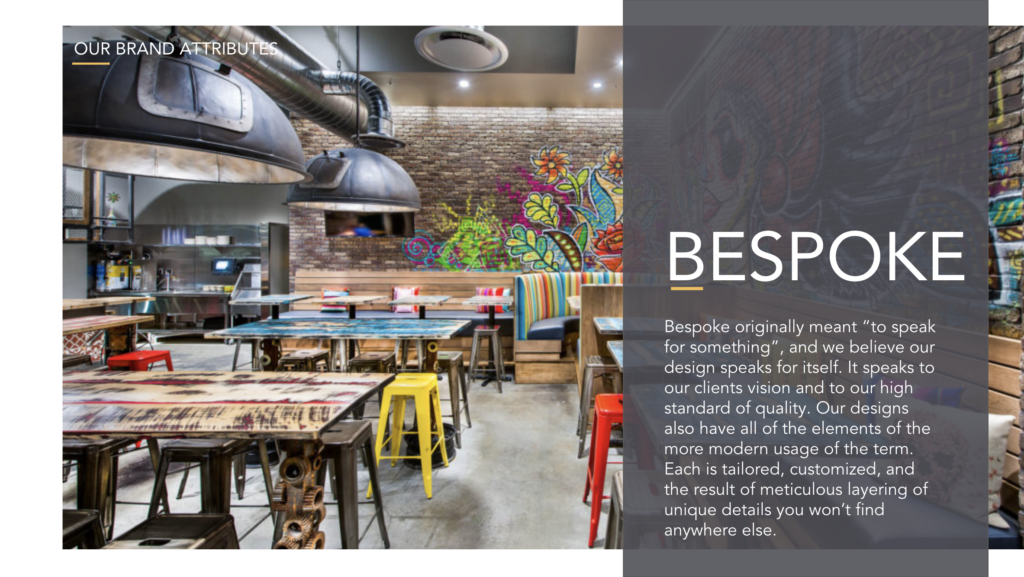
Kimberly Timmons Interiors had built a respected luxury brand across three distinct studios: hospitality design, high-end residential, and interior merchandising.
Reputation was strong.
Project quality was exceptional.
Kimberly could close nearly any lead she personally touched.
But growth was increasingly founder-dependent.
As the team grew, the commercial system did not.
KTI had ambitious growth goals, but felt stuck.
The firm’s ideal customer is in the luxury space. Their reputation alone was driving them leads, but their founder was overloaded. They had no system to qualify leads that didn’t fit their ideal customer profile, and perhaps worse, they were completely reliant on their founder for closing leads that did fit.
Messaging varied by team member. Studios were distinct, but their value propositions were not intentionally engineered. The website showcased beautiful work, but not the firm’s differentiated approach.
Without codified positioning, sales relied heavily on the founder. Voice and differentiation lived in conversations rather than in infrastructure.
Growth required clarity, not more awareness.
We codified the firm’s positioning and messaging working with key stakeholders across the three design studios.
This framework became the foundation for the firm’s website, content, and channel strategy, allowing growth to scale beyond Kimberly’s direct involvement.
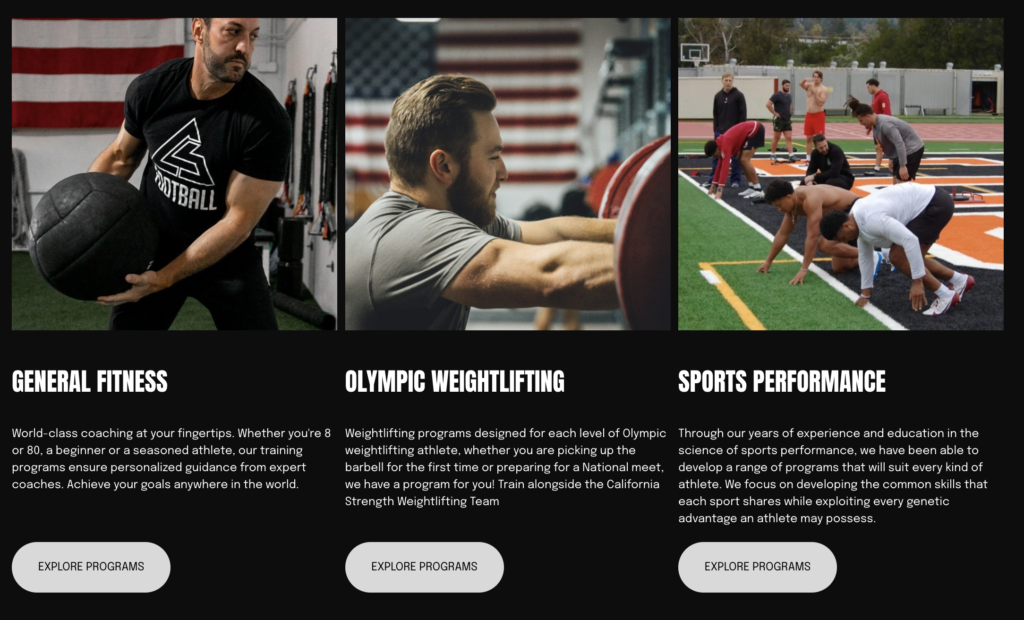
California Strength offers a variety of subscription-based digital training programs delivered through a third-party app.
Trial-to-paid conversion looked healthy, but churn was eroding lifetime value.
Historically, their primary acquisition channel was Youtube, but it was quickly becoming clear that the channel could no longer drive the volume of new leads they needed to drive real revenue growth.
Paid acquisition spend had to work harder than it should. Resulting in unit economics that stalled growth.
The business was compensating for weak onboarding with more top-of-funnel investment.
The product was strong. The system was not.
Onboarding relied on generic, date-triggered emails with limited segmentation.
Messaging was not grounded in persona-specific value propositions.
Behavior during the first weeks was not intentionally shaped.
Adoption was assumed rather than engineered.
The result: short customer lifespans and distorted CAC:LTV ratios.
We installed a lifecycle onboarding system designed to improve both conversion and retention.
The new system:
• Segmented athletes by persona and motivation
• Reinforced differentiated value propositions early
• Nudged specific behaviors tied to workout engagement
• Reduced friction and addressed objections proactively
• Structured calls-to-action to drive product adoption
Even without full in-app data ownership, the lifecycle system used available signals to influence behavior and strengthen early habit formation.
Results:

Vail resorts competes in a crowded space. Competition for ski visits is fierce.
Destination skiers rarely return to the same mountain year after year. They “sample.” One season in Colorado. Next season in Utah. Then somewhere entirely new.
Within the portfolio, seven resorts were largely marketing independently. Each told its own story. Each ran its own campaigns. Each bid on overlapping audiences.
The result was costly. External competition was eating market share, internal cannibalization was driving up customer acquisition cost, and fragmented messaging meant guests were still leaving the portfolio to try something new.
How do you preserve the desire for new experiences while keeping demand inside the portfolio?
Fragmented acquisition and resort-first messaging inflated costs and diluted portfolio-level retention.
Brand and performance marketing operated in siloes rather than as a coordinated system.
We unified seven independently marketed resorts into a single, coordinated demand system under a campaign titled: This is what Epic feels like.
Top-of-funnel acquisition was consolidated under a single campaign, personas were clearly defined, and creative, media, and landing experiences were aligned to intelligently route guests within the portfolio rather than compete against each other.
Resulting in: